

Practical Strategies for Every Presenter
by Chris Vela Che, OTAN Subject Matter Expert
Have you ever given a presentation or taught a lesson and noticed that some of your audience members are looking at their phones, checking their laptops, or showing other signs that they’re losing focus? If so, you’re not alone. Keeping an audience engaged can be one of the biggest challenges for any presenter or instructor.
.png)
ChatGPT Generated Image # 1: Distracted Audience in Modern Classroom
The good news? You don’t have to settle for distracted faces, silent rooms, or audiences glued to their phones. Whether you are presenting in-person or virtually, there are several simple, proven evidence-based strategies you can use to get people involved, keep their attention, and turn a passive presentation into a more interactive and engaging learning experience.
Engagement Does Not Happen By Accident. It Happens By Design.
Being nice, friendly, and approachable can help create a positive atmosphere, but they aren’t enough to capture our audience’s attention and encourage participation. We need to be intentional about when, where, and how we invite our audience to connect with the content. Meaningful engagement doesn’t happen by accident. It happens when we create purposeful opportunities for people to think, participate, and invest in the learning experience.
The Engagement Toolkit

ChatGPT Generated Image # 2 of a Toolkit for Engagement
Let’s explore practical strategies to add to our engagement toolkit, strategies we can pull out and use whenever we deliver a presentation, lead a meeting, or facilitate a learning experience.
Strategy 1. Background Knowledge
Instead of opening your presentation with, “Today, we’re going to talk about…”, start with a question connected to your presentation topic or title. A well-chosen opening question immediately invites your audience to think, reflect, and participate.
For example, if you’re presenting on Canvas LMS, begin with a question that helps you discover what your audience already knows about Canvas. You might ask, “How confident are you using Canvas?” or “What is one thing you currently use Canvas for?” This simple approach activates prior knowledge, encourages participation, and gets your audience thinking about the topic before the presentation even begins.
Strategy 2. Change Something Every 10 to 20 Minutes
According to molecular biologist John Medina in his 2008 book, Brain Rules, the brain’s attention begins to decrease after about 10 minutes. This suggests that effective presentations should include opportunities to re-engage the audience regularly rather than relying on a continuous lecture.
There are many simple ways to re-engage your audience. You can conduct a quick poll, facilitate a hands-on activity, tell a story, show a short video, or pause to give participants time to reflect on the content you’ve already presented. The key is to break up the presentation and give your audience opportunities to actively participate in the learning experience.
Strategy 3. Less Lecture More Doing
People often learn best when they are actively involved in the learning process through their own actions and experiences. Let this principle guide your presentation by creating opportunities for your audience to participate, practice, explore, and connect the content to their own experiences.
Strategy 4. Use Multiple Ways for Learners to Participate
Use a variety of modalities to engage participants. Incorporate interactive games, doodling or drawing, writing, typing in the Zoom chat, physical response activities that get everyone moving, and small-group discussions. Varying the ways participants can engage creates more opportunities for everyone to contribute and stay actively involved.
Strategy 5. Everyone Participates
Avoid asking your audience, “Do you have any questions?” Instead, create activities that give everyone a chance to share their ideas or answer questions. One simple option is the Fist-to-Five activity, a quick, non-verbal way to check participants’ agreement, confidence, or understanding. Participants hold up a closed fist (zero) or one to five fingers to show their level of agreement, confidence, or understanding.
Strategy 6. Keep Activities Short
Plan short activities that last no more than 20 minutes. Keep them high-energy and designed for quick transitions to maintain engagement and momentum.
Strategy 7. End With An Action
Plan time to give participants time to think, reflect, and respond to questions such as "What is the most important thing you learned today?", “What is one thing you will try tomorrow?”, "What is one thing you are still confused about?", or "How can you use today's concept in the real world?".
References.
Image # 1 generated using the prompt “A presentation with some of the audience members looking at their phones, checking their laptops,” by ChatGPT 2026 (https://chatgpt.com/).
Image # 2 generated using the prompt “Toolkit for Engagement in Public Speaking Contexts,” by ChatGPT 2026 (https://chatgpt.com/).
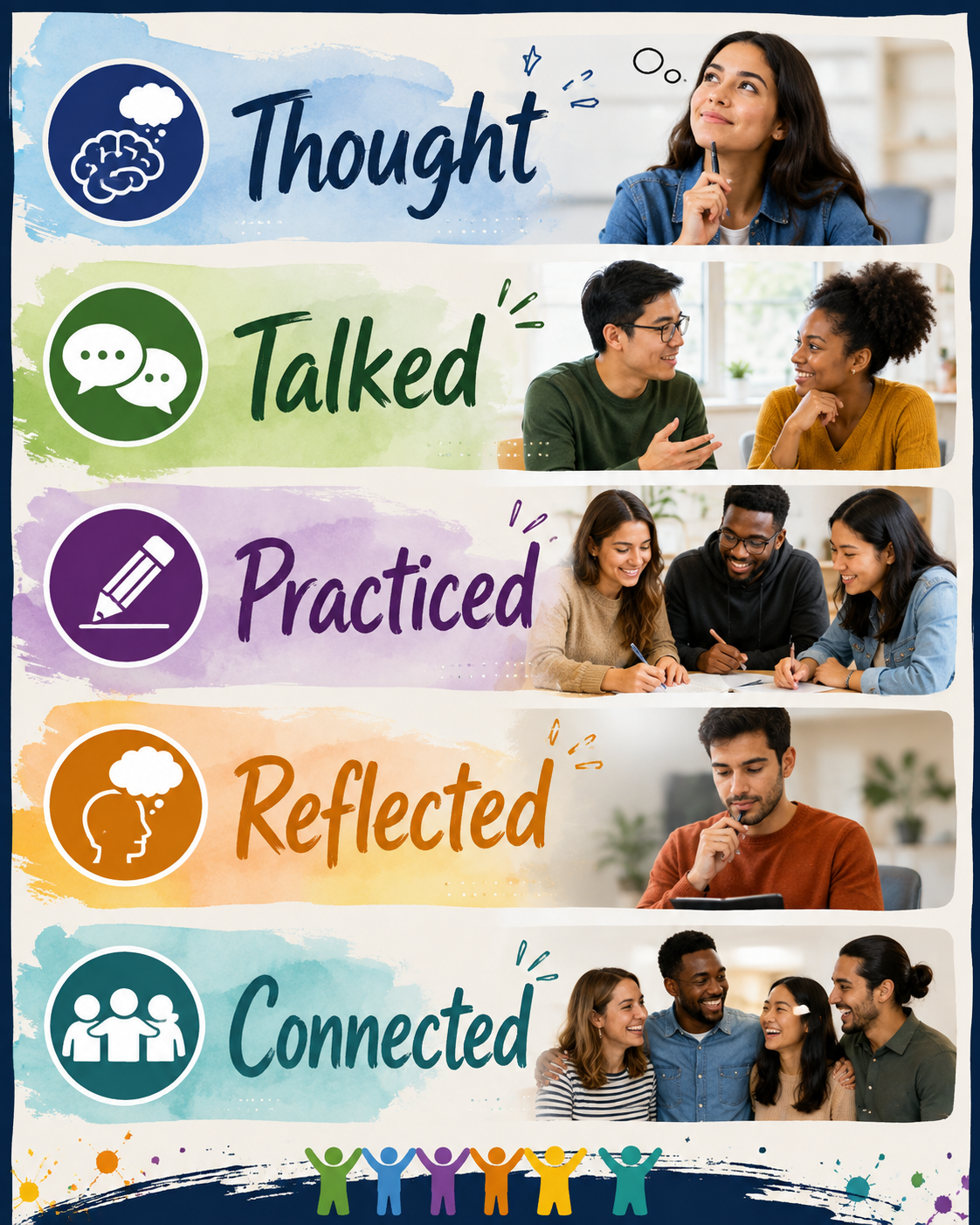
Image # 3 generated using the prompt “Thought, Talked, Practiced, Reflected, Connected ,” by ChatGPT 2026 (https://chatgpt.com/).
Medina, J. (2008). Brain rules: 12 principles for surviving and thriving at work, home, and school. Pear Press.